


Salen “Doc” Herke: Coach, Veteran, and Architect of Peoria High School’s Golden Era

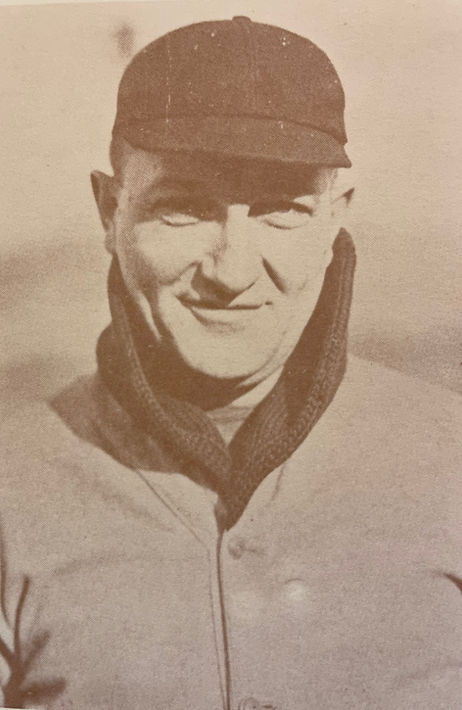
For more than twenty‑five years, Salen “Doc” Herke shaped the identity of Peoria High School athletics. His name is woven into the fabric of the school’s history — a symbol of discipline, excellence, and leadership. Yet the story of Doc Herke is not only one of championships and records. It is also the story of a young American who answered his nation’s call during World War I, returned home with sharpened purpose, and built one of the most respected athletic programs in Illinois.
Early Life and Arrival in Peoria
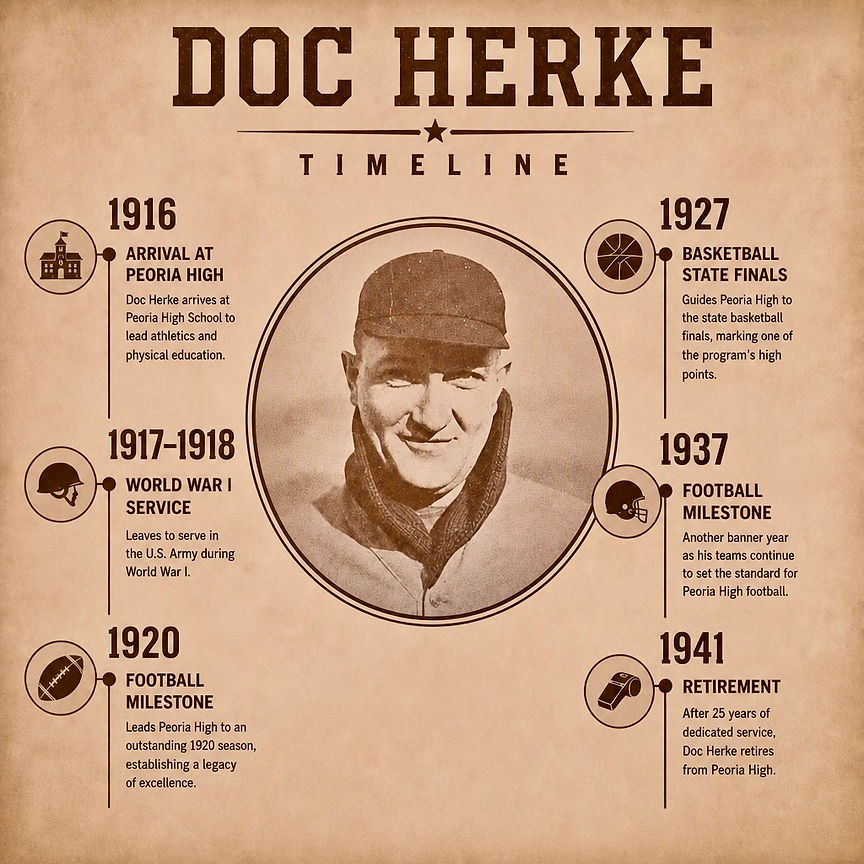
By the time Herke arrived at Peoria High School in 1916, he had already earned a reputation as a thoughtful, organized, and demanding coach. His nickname, “Doc,” reflected both his methodical nature and the respect he commanded. He stepped into a school ready for structure and leadership — and he provided both. Peoria High was beginning to emerge as a regional competitor, but Herke’s arrival marked the beginning of a true athletic identity. His early teams were disciplined, well‑conditioned, and grounded in fundamentals, traits that would define his entire career.
World War I Service: A Turning Point
When the United States entered World War I in 1917, Herke joined thousands of young men who enlisted or were drafted into military service. Like many educators and coaches of his generation, he believed deeply in duty and national responsibility. While detailed records of his assignments are limited — as is common for servicemen of the era — Herke’s time in uniform profoundly shaped his approach to leadership. The military emphasized:
-Physical conditioning and endurance
-Mental toughness under pressure
-Precision, discipline, and structure
-Team cohesion and shared responsibility
These values became the foundation of his coaching philosophy when he returned to Peoria High after the war. Herke belonged to the generation of veterans who came home determined to strengthen communities, build institutions, and prepare young people for a rapidly changing world. His return to Peoria High marked the beginning of one of the most successful athletic eras in Illinois history.
Building a Football Powerhouse
After World War I, Herke resumed his role with renewed purpose. Over the next 25 seasons, he built a football program defined by discipline, conditioning, and strategic execution — qualities that mirrored the military training he had experienced. His career record remains one of the strongest in Peoria history: 141 wins 61 losses 12 ties .698 winning percentage Several seasons stand out: 1920: The Lions outscored opponents 339–27, one of the most dominant seasons in school history. 1937: Another powerhouse year, with a scoring margin of 267–36. 1919–1929: A decade of sustained excellence, finishing 69‑15‑9. Herke’s teams were known for toughness, preparation, and the ability to execute under pressure — traits that reflected his wartime experience and leadership style.
A Master Teacher of Basketball
Herke’s influence extended beyond football. He also coached basketball for most of his tenure, compiling an extraordinary record: 410 wins 183 losses 2 ties Under his leadership, Peoria High became a perennial contender in the Illinois High School Association (IHSA) state tournament. His teams reached the state finals seven times, earning: State Runner‑Up (1927) Third Place (one appearance) Fourth Place (two appearances) Herke emphasized fundamentals, defensive intensity, and teamwork. His players were known for their discipline and ability to perform in high‑pressure situations — again reflecting the values he carried home from wartime service.
Coaching Philosophy: Discipline, Character, and Unity
Doc Herke believed athletics were an extension of the classroom. His coaching style blended structure with mentorship, emphasizing: Character development Academic responsibility Respect for opponents Physical fitness Team unity Players often described him as demanding but fair — a coach who expected excellence but also cared deeply about their growth as young men. Many of his former athletes later became educators, coaches, and community leaders, carrying forward the lessons they learned under his guidance.
Impact on Peoria High School and the Community
Herke’s influence extended far beyond the athletic fields. His programs brought the community together, filled gymnasiums and stadiums, and elevated Peoria High’s reputation across Illinois. During the 1920s and 1930s, Peoria became known as a sports‑centered city, and Herke’s leadership played a major role in that identity. Even after retiring in 1941, Doc Herke remained a respected figure in local athletics and education. His legacy continued to shape the culture of Peoria High School for decades.
Honors and Legacy
Doc Herke’s contributions have been recognized through multiple honors: Greater Peoria Sports Hall of Fame inductee Basketball Museum of Illinois Hall of Fame inductee Frequently cited in historical accounts of Illinois high school sports Remembered as one of Peoria High’s foundational athletic leaders His records, longevity, and influence place him among the most successful coaches in Illinois high school history.
Conclusion
Salen “Doc” Herke’s story is one of service — service to his country during World War I, and service to generations of students at Peoria High School. His leadership shaped championship teams, but more importantly, it shaped young people who carried his lessons into their lives and communities. Today, his legacy remains woven into the fabric of Peoria High School. The discipline he taught, the unity he fostered, and the pride he instilled continue to define what it means to be a Lion. Doc Herke was more than a coach. He was a veteran, a mentor, a builder of character — and one of the greatest figures in the history of Peoria High School.
.jpeg)

Photo- Crest 1927
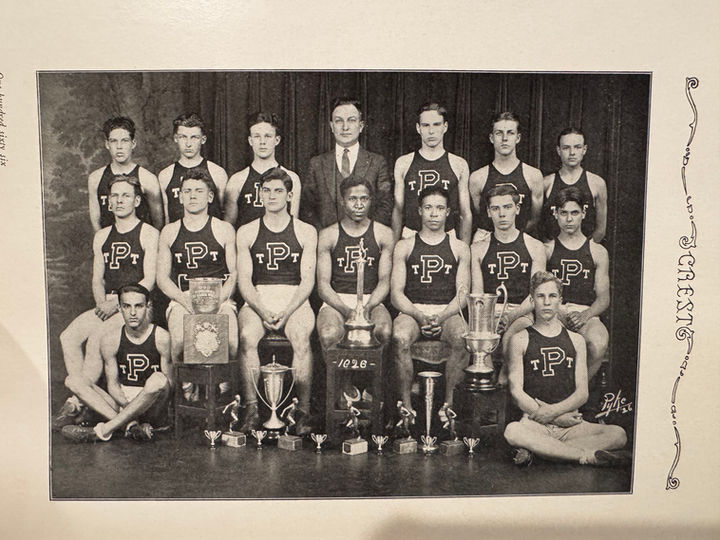
Photo- 1927 Crest

Photo 1927 Crest

Photo 1929 Crest
If you look at the 1927 Crest, and others of that era, you will find that Salen Herke coached several sports every single school year. Later in his coaching years he became the Director of Athletics. Baseball, Basketball, Football, Track and more were a part of his yearly activities. His records proved his ability to teach, coach and mentor our sports teams at Peoria High.
For many of us who played sports at Peoria High School...you now know why the athletic field behind Peoria High is called Herke Field. Many of us remember running around the track to warm-up for practice.....and for the football players, at least, we ran the hills either to get in shape or remind us of who we need to block in a game. "Hill's" got our attention.
To see Herke today it has changed a little. Instead of a single field for football and in the earlier years a baseball diamond, it has been widened and has two football practice fields. A newer baseball diamond is behind the pool along with another track and soccer field. Athletic is alive and well at PHS. We have years that are better than some but we continue play those sporting events with the standard established by "Doc" Herke. What a history!

OUR HISTORY
Peoria High's Legacy — 170 Years Strong
Founded in 1856, Peoria High School stands as one of the oldest public high schools in the state of Illinois — a living monument to the power of public education and the spirit of community. For 170 years, the halls of Peoria High have echoed with the ambitions of young people who went on to become teachers, doctors, engineers, tradespeople, artists, civic leaders, and entrepreneurs. Generations of Lions have carried the school's fierce pride into every corner of Peoria and far beyond. The building itself has become inseparable from the city's identity: a landmark that has weathered wars, recessions, and sweeping social change while never losing its core mission. Through every era, Peoria High has adapted — embracing new curricula, new technologies, and new ideas — while preserving the traditions and values that make a Lion a Lion. That continuity is not accidental. It is the product of a community that has always believed its young people deserve the very best.
OUR MISSION
The Alumni Association's Mission
The Peoria High School Alumni Association exists to be the connective tissue between every generation of graduates who have walked the stage and received a diploma as a Lion. Our mission is threefold: to honor the past, support the present, and invest in the future. We host reunions and community events that rekindle lifelong friendships and create new ones. We celebrate the achievements of distinguished alumni whose accomplishments reflect the excellence of their alma mater. And we advocate — tirelessly, passionately — on behalf of today's students and the institution they call home. The PHSAA is more than a mailing list or an annual banquet. It is a living network of thousands of graduates united by shared experience and shared purpose. Whether you graduated in 1960 or 2020, whether you live in Peoria or across the country, you are a Lion — and this association is your home.
SUPPORTING ALL PATHS
Supporting All Paths — College and Vocational
At PHSAA, we believe that every Lion deserves a strong foundation for the next chapter — regardless of the path they choose. Whether a graduate pursues a four-year university degree, enrolls at a community college, or enters a skilled trade or vocational program, their ambition deserves investment. Our scholarship program reflects that conviction: we fund awards for academic achievement, leadership, career-technical education, and community service alike. Through our mentorship initiative, alumni in dozens of professional fields connect directly with current students, offering guidance, job shadows, and real-world perspective. We also support workforce-readiness programs that equip students with certifications, interview skills, and financial literacy before they leave our halls. Equity is at the heart of this work. No student should be limited by circumstance. Every Lion who walks across that stage should know that a community of alumni stands behind them, ready to help them roar.
THE OPERATING FUND
The Operating Fund — Why It Matters
The PHSAA Operating Fund is the financial backbone of everything we do. It is the engine that powers our scholarships, our outreach events, our student support programs, and the day-to-day work of keeping this association strong. Public school budgets face constant pressure, and there are critical needs — mentorship coordination, alumni communications, reunion logistics, student emergency assistance — that simply cannot be covered by district funding alone. That is where you come in. Your gift to the Operating Fund goes directly to work: a scholarship check placed in a student's hand, a career fair that opens new doors, a reunion that reminds a graduate they will always belong. We are asking every alumnus to give at whatever level feels right — $18.56 in honor of our founding year, $50, $100, or more. No amount is too small, and no gift goes unnoticed. Every dollar carries the pride and the promise of a Lion. This is your school, your legacy, and your opportunity to shape what comes next.


Make a difference
Change starts with people like you. Your donation helps make a real impact, one action at a time. Together, we can do more.
Frequency
One time
Monthly
Yearly
Amount
$25
$35
$50
$100
$250
$1,856
Other
0/100
Comment (optional)
Mail your donation:
Peoria High School Alumni Association
1615 N North St
Peoria, IL 61604-4131
PEORIA HIGH SCHOOL ALUMNI ASSOCIATION
is a 501(c)(3) nonprofit organization – EIN: 37-1267248
Your contribution is tax-deductible to the extent allowed by law.
Established in 1856, Peoria High School is the largest oldest high school
in continuous operation West of The Allegheny Mountains
Total Contributions as of September 23, 2026
$9118.58
Our Goal- $50,000.00 We can do this!
Remember Cat Employees and Retirees -
You can match through your Cat Foundation

.png)

Introducing the Peoria High School Alumni Association Class of 2026
Distinguished Alumni Inductees

Recognized and honored as part of the Gold Lion Luncheon held
Saturday, October 10, 2026, in the Peoria High School Foyer
Congratulations to our newest Distinguished Alumni!
Been there, Done That! Got that....T-shirt
PHS Alumni Gear will be back soon!
Working on new items!


Store closed
October 15th!









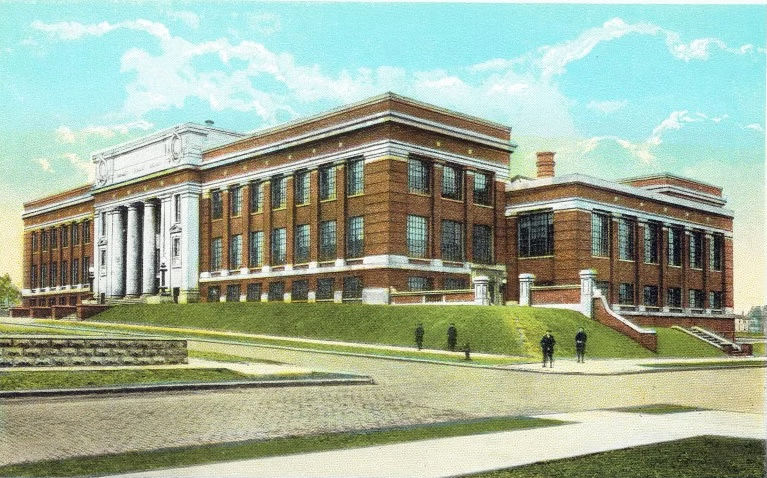
PEORIA HIGH SCHOOL
A Building, a City, and a Century of Dreams
There are buildings that serve a purpose, and then there are buildings that become part of a city's identity.
For generations of Peorians, the great school standing at 1615 North North Street has been both.
Today, Peoria High School is one of the city's most recognizable landmarks. But when you stand in front of the building and look at its limestone columns, broad entrance and imposing architecture, it is worth remembering that the school was not built merely to educate students.
It was built to express what Peoria believed about its future.
A School Older Than Its Building
The story actually begins long before 1916.
Peoria High School was established in 1856, when Peoria was still a young and rapidly developing city. Its earliest students attended classes in several different locations as the school and the city grew. The school eventually occupied the building at Monroe and Fayette Streets, where generations of Peoria students received their education.
By the early twentieth century, however, Peoria was booming.
Industry was expanding. Families were moving into the city. Enrollment was increasing. The old high school could no longer meet the needs of a growing community.
In 1912, the Peoria Board of Education decided to build a new high school on North Street. A large tract of land at North and Richmond streets was acquired, conveniently located along a new streetcar line serving the expanding parts of the city.
Four years later, the dream became reality.
The Building of 1916
The magnificent new Peoria High School was completed in 1916.
Historical accounts record the building's dedication in August, while the school officially opened for students on September 11, 1916.
The architect was Frederic J. Klein, one of Peoria's most accomplished architects.
Klein was largely self-taught and became one of the important architects of early twentieth-century Peoria. His work included schools, theaters, churches, homes and public buildings throughout the region. His architectural legacy can still be seen in such Peoria landmarks as the Madison Theatre, the Packard Building, Trinity Lutheran Church, park pavilions and the Japanese Bridge at Bradley Park.
Peoria High was one of his signature works.
The building's classical design featured massive limestone columns with Doric capitals, a recessed entrance and a monumental facade. The National Register documentation for Klein's work specifically identifies Peoria High as an example of his preference for Classical architectural design.
But Klein did not build the school alone.
The construction was carried out by V. Jobst & Sons, one of Peoria's major construction firms.
The Jobst family had established its construction company in Peoria in 1859, and the company went on to erect many of the city's important buildings. Historical sources specifically list Peoria High School among the firm's major projects.
There is something especially fitting about that connection.
The Jobst family did not simply build buildings in Peoria. They helped build the city itself.
And Peoria High would become one of their most enduring contributions.
A School Unlike Anything Peoria Had Seen
When the doors opened, Peoria High was an impressive institution.
Contemporary descriptions praised its spacious classrooms, enormous windows, finely crafted woodwork, plaster ornamentation and cast-iron details. It contained industrial workshops, a large auditorium, two gymnasiums, athletic facilities and a substantial power plant.
This was 1916.
The United States was entering the final years of World War I. Automobiles were becoming common. Airplanes were still a novelty. Radio was in its infancy. There were no computers, no television, no internet and no smartphones.
Yet Peoria's leaders were building a school designed to prepare young people for a changing world.
The school was not intended to be temporary.
It was built to last.
And it did.
The Test of Time
More than a century later, the original building is still standing. That alone is remarkable. But surviving is not the same as remaining useful.
Peoria High has managed to do both.
The building has been expanded and modernized over the decades. District records identify additions in 1930, 1961 and 2012, while other improvements have updated the school's mechanical systems, science facilities, athletic spaces and other infrastructure.
The result is something unusual: A school where the architecture of 1916 still lives alongside the technology and educational needs of the twenty-first century.
The walls are old.
The mission is not.
The People Who Walked Through the Doors
Of course, the greatest history of Peoria High is not found in its limestone.
It is found in its people.
For more than a century, young men and women have entered those doors carrying books, lunches, athletic equipment and dreams. Some became famous. Many became successful without ever appearing in a newspaper. And countless others simply became good citizens—the kind of people every community depends upon.
Peoria High's alumni include people whose influence reached far beyond Central Illinois.
Edward F. Dunne, a member of the Class of 1871, went on to become mayor of Chicago and later governor of Illinois. He remains the only person elected both mayor of Chicago and governor of Illinois.
Philip José Farmer, Class of 1936, became a celebrated author whose work helped shape modern science fiction.
Betty Friedan, Class of 1938, became one of the most influential writers and voices in the American women's movement.
Robert H. Michel, Class of 1940, went on to become a prominent member and leader of the United States House of Representatives.
John Shalikashvili, Class of 1954, rose to the highest levels of the United States military and became Chairman of the Joint Chiefs of Staff.
And then there was a young man from Peoria whose name would become known throughout America:
Richard Pryor. He walked the halls of Peoria High before becoming one of the most influential comedians and performers in American history.
These names tell only part of the story.
There were also generations of Peoria High graduates who became doctors, teachers, attorneys, engineers, entrepreneurs, military officers, police officers, firefighters, artists, musicians, coaches and community leaders.
They built businesses. They raised families. They served their neighbors. They served Illinois. They served the United States.
A Tradition of Achievement
Peoria High's tradition of excellence extends beyond the classroom.
The school has a remarkable athletic history as well.
Peoria High won the first Illinois state basketball championship in 1908, and the school also won the first Illinois state track and field championship in 1893. Later generations added additional state championships in basketball, football and speech.
Football created another enduring Peoria tradition.
The famous Peoria-Manuel Thanksgiving rivalry began in the early twentieth century, becoming one of the city's great annual traditions and eventually lasting until 1973.
The building on North Street became the backdrop for all of it.
Victories.
Defeats.
Friendships.
Rivalries.
Graduations.
Homecomings.
And memories.
Why Is It Still Here?
Perhaps the most important question is not How did the building survive? It is: Why did Peoria keep it?
The answer may be that the people of Peoria understood something that is easy to forget. Historic buildings are not valuable simply because they are old. They are valuable because of what happened inside them. Peoria High is a physical record of the ambitions of earlier generations. The people who approved the building in 1912 could have built something ordinary. Instead, they built something magnificent. They believed their children deserved it. The architect, Frederic Klein, gave the school its form. V. Jobst & Sons gave it substance. Teachers gave it purpose. And generations of students gave it life. That is why the building has endured.
110 Years Later
In 2026, Peoria High's North Street building reaches its 110th year. Think about that.
When the first students entered those doors in 1916, Woodrow Wilson was president. World War I was raging in Europe. The automobile was still transforming American life. The world was a very different place. Yet the same basic promise remains. A young person enters the building not knowing exactly what the future holds.
A teacher sees possibility. A student discovers a talent. A friend is made. A lesson is learned. A challenge is overcome. And eventually, a graduate walks back out those doors and begins writing the next chapter. That has happened thousands of times. It will happen again and again. That may be the greatest accomplishment of Peoria High School. Not the limestone. Not the columns. Not the architecture. Not even the famous names. It is the generations of people who came through those doors and went out into the world determined to make a difference. Some changed Peoria. Some changed Illinois. Some changed America. Some changed the world. And many simply changed the life of another person. All of them are part of the story. The old building on North Street has been standing for 110 years. It has endured because it was built well. It has remained relevant because it has been cared for. But most of all, it has endured because Peoria has continued to believe in what happens inside it. The building is a monument. The students are the legacy. And the story is still being written.
Peoria High School.
The Pride of the City since 1856.
Please take a minute to donate!
We don't have a membership fee...we exist due to your donations.
You are what makes us go! Just hit the donate button below or scan the QR code.

For you Tech Savvy Lions, This QR code will take you to year long PayPal donation page to PHSAA
or
Mail a check to:
Peoria High School Alumni Association
1615 N North St
Peoria, IL. 61604
PEORIA HIGH SCHOOL ALUMNI ASSOCIATION
is a 501(c)(3) nonprofit organization – EIN: 37-1267248
Your contribution is tax-deductible to the extent allowed by law.
Established in 1856, Peoria High School is the largest oldest high school
in continuous operation West of The Allegheny Mountains
Remember these fun PE exercises?
Would love to see these come back!
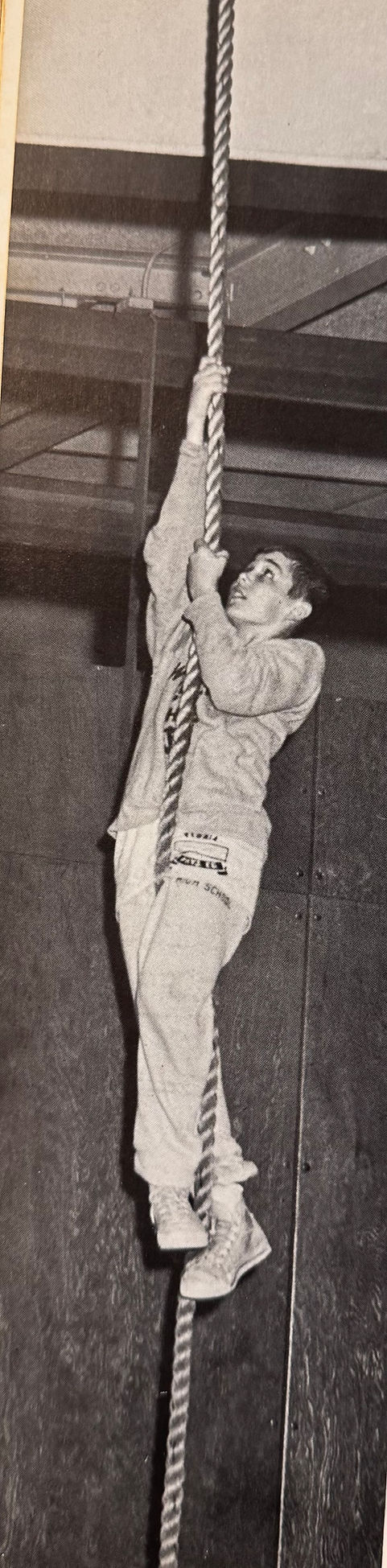
Manning McComb Chevrolet was a proud supporter of the Crest!
From the 1966 Crest


The Peoria High School Alumni Association Facebook Feed


